July 28, 2010

Gun Dogs Report to Training Camp

Like Pavlov's bell, the last week in July triggers football fans to salivate at the mouth. Hometown teams are yet again arriving at their respective training camps to gear up for another hard fought season. Rabid fans speculate that this is "the year" their team brings home the Super Bowl. Turn on the radio dial or flip the t.v. remote and sports talk show hosts are full of outlandish predictions believing wholeheartedly in their own swami like mysticism. Just like football players getting in game shape, all serious gun dogs and their owners must now check in for preseason conditioning drills. The summertime vacation is officially over. It won't be long before opening day and our four legged hunting partners must be ready to run the playbook from front to back! For most serious bird hunters it is about 10-12 weeks before before kickoff of the 2010 waterfowl and/or upland season. It is up to us as canine masters to stick to a routine schedule of physical fitness. Here a few things to keep in mind during the 2010 Gun Dog Training Camp...
  • Make a tight schedule and stick to it! Not only will the increased physical activity help your dog become fit, it just might help you shed a couple unwanted pounds in the process. Remember, for every mile you walk a field this season, your dog will likely cover three times that if not more!

  • Start transitioning your dog to a higher Protein/Fat percentage food. Remember 30/20% is about the average mix for a steadily working gun dog.

  • In addition to scheduled daily workouts, mix it up a bit for your dog's personal enjoyment. Visit different training fields, run stadium stairs, strap on the roller blades, take a bike ride together, etc...whatever you come up with to variate the routine while still maximizing your dog's fitness regiment.

  • Take it easy on the treats. Scale back the grain based "Scooby Snacks" and move to high protein sourced rewards such as dehydrated duck or chicken strips.

  • Workout at daybreak or sunset. Your dog will most likely be hunting as the sun rises or sets. The time is now to get both your time clocks set and dialed in for maximum activity. These are the bewitching hours where animals are most active, including birds and your trusty bird dog. To further mention, dawn and dusk are the coolest part of the day in both temperature and experience!

  • Take your dog for a preseason vet visit for a complete physical. Get him or her checked out thoroughly and ready rock n' roll come opening day! Blood tests, stool samples, and wellness check should be included during this visit. Just like pro athletes, it is always a good idea to get a clean bill of health before the season starts.

  • Train and condition in fields with heavy cover. Get your dogs paw pads and under carriage toughened up now. Early season bird cover is not much different than summer field conditions. Briar's, thorns, nettles, etc are all present so get out there and mix it up in the rough stuff!

  • If you have not already, train your dog to drink from a sport squirt bottle or hydration pack hose nozzle. It will help them rehydrate quickly and much easier to administer in the field.

  • Get your dog on LIVE birds before the season opens. Even if it at a local preserve or just a few hobbled pigeons shot out on the back forty, this is critical piece of training camp. Live bird drills should always be a live fire! Leave the popper shells for field trailers! Pack the heat and drop those birds that your dog proudly found on his own.

Off-seasoning conditioning leads to in-season productivity! Feed them right and prepare them accordingly.

And finally...more for the sanity of the master than gun dog! Get all the honey do's out of the way NOW! Fix the deck, paint the bathroom, repair the fence or whatever it is. Bird hunting season is short and it is ALWAYS a good idea to have as much sweat equity built up as possible!

I hope all of you have a great 2010 Gun Dog Training Camp and more importantly looking forward to a productive season. God knows I am!

Best of luck out there. -Mark


July 14, 2010

Preventative Measures for Hip & Joint Health

Seeing an aging gun dog suffer through the pains of aching joints or hip dysplasia simply rips my heart to shreds. It's like watching an iconic, superstar ball player way past his prime attempting to eek out one last season in the big leagues. Their statistics have long dropped off but they continue on. They play in earnest for one last season in the spotlight but in the recesses of their mind realize the time to shine has come and gone.

There is no magic bullet, no wonder drug, and no snake oil science that can alter the course of deteriorating joints. Over time, cartilage that holds and lubricates the skeleton together are in a constant state of deterioration. However, there are a number of nutritional supplements we can supply to both ourselves and our dogs to help slow the negative process. For the sake of this post we are going to focus solely on what we can do to help or four legged friends knees and hips stay healthier longer!

When the topic of canine joint care arises it is always quickly followed by two words; Glucosamine and Chondroitin(G & C). According to the well respected website http://www.vetinfo.com/ "Glucosamine and chondroitin are normally found in the cartilage of living animals. In healthy animals, the body synthesizes glucosamine to keep the joints healthy. As your dog ages, his body's ability to create glucosamine diminishes, and osteoarthritis occurs. A glucosamine supplement for dogs can help your elderly dog's body maintain joint health. Glucosamine for dogs can help reduce your dog's pain and restore his freedom of movement. Unlike pain medications, glucosamine has few side effects, none of which are very severe. As a natural dog food supplement, glucosamine can soothe the symptoms of arthritis and hip dysplasia in dogs. Glucosamine supplements work to restore and regenerate your dog's damaged joints. They also have anti-inflammatory properties. Glucosamine for dogs can be used as a preventative measure in elderly dogs who are at high risk for arthritis. Glucosamine supplements for dogs can help treat the symptoms of dogs already suffering from arthritis. Within two weeks to thirty days, you should notice that your dog has become more lively and active. Some owners report a full recovery from symptoms of arthritis and hip dysplasia. You'll want to adjust your dog's daily dosage according to his weight and the severity of his symptoms. You'll want to administer about 750 mg of glucosamine per fifty pounds of body weight at a minimum; you can raise this dosage as necessary if your dog's symptoms are more severe. Look for a product made with glucosamine sulfate or glucosamine HCL. Avoid products made with 2KCL and NaCL. Liquid glucosamine is the easiest to administer. It can be difficult to encourage dogs to swallow pills; if they are mixed with food, they may become stuck in the teeth and lost. A liquid can be poured directly over food. Liquid glucosamine tastes good to most dogs. Vets recommend doubling the dosage of glucosamine during the first one or two weeks for maximum regenerative benefit."

In addition to vet prescriptions, pet retailers carry a wide variety of over the counter tablets, liquids, or powder forms of glucosamine and chondroitin supplements. Obviously, the vet prescribed supplements are normally much stronger doses. Also, many premium brands of dog food have now added both G & C into their large breed dry food formulas. In fact, there are also a few companies that are offering tasty dog treats with high levels of both nutrients. One company in particular, Dogswell, offers a full line of treats called "Happy Hips". Although treats do not contain the daily levels adequate to match prescription or over the counter dedicated G & C supplements, they are a convenient way to maintain some form of additional G & C into your dog's daily diet. My pointer Dewey, is a HUGE fan of Dogwell's "Happy Hips Veggie Life treats. These are dried apples wrapped in chicken! Honestly, I ate one and thought they were very tasty! They are 100% natural and are made solely of Chicken Breast, Apple, Vitamin E Supplement, Glucosamine Hydrochloride, and Chondrotin Sulfate. Dogswell also makes their Happy Hip line in protein only dried duck or chicken strip treats. Click on the image to check out their website for more information and Dogswell's other great G & C based treats.
If you are the owner of any breed of working dog I strongly recommend adding some form of G & C to their diet immediately. Although it can't "turn back the clock" it can help slow the process down and/or help add comfort to your aging dog who is showing signs of chronic joint pain or hip dysplasia. It would also be a great idea to have your dog x-rayed by a knowledgeable vet to help head of an possible future issues!

As always, I urge any questions or comments about this post. Feel free to email me personally at northupland@yahoo.com or drop a comment in the below box.

Best of luck out there. -Mark

July 9, 2010

Pocket Guide for Dog Food Consumers

These days more and more gun dog owners are asking questions about proteins, fats, carbohydrates, vitamins and other dog food nutrients. It is reassuring to know people want straight answers and are serious about supplying their hunting partners with the best nutrition possible. It is a confusing retail world out there with hundreds of dog foods to choose from. It is also long overdue that I put together a sort of "cliff's notes" or pocket guide to better help the dog food consumer. I invite you to comment on this post at the end or email with your direct questions to northupland@yahoo.com I thank you all for taking the time to care about your dog's nutrition!

Proteins are the basic building blocks of life. Protein intake ensures cells, tissues, organs, enzymes, hormones and antibodies are digested for growth, maintenance, reproduction, repair and energy. Meat proteins such as chicken, lamb, turkey, beef, bison, venison, duck, and fish have complete amino acid profiles. That simple means they contain all of the amino acids your dog needs. Amino acids are the building blocks of proteins, and are divided into essential and non-essential amino acids. Essential amino acids are ones that cannot be manufactured by the body in sufficient quantities and must be supplied in the working dogs diet. Examples of essential amino acids are carnitine, arginine and lysine. Non-essential amino acids are ones that your dog can produce naturally in sufficient quantities. Protein levels for working gun dogs should be right around 30% give or take the amount of activity. That percentage can be found right on the bag in the guaranteed analysis. But buyer beware! An advertised  30% protein rating can be misleading. Some manufacturers use vegetable based protein gluten, a.k.a. "corn gluten" to boost the protein rating.  Because of vegetable gluten's composition it leads to an inherent lack of digestibility. Most of the "advertised" protein content will be eaten and excreted by your dog with very little nutritional protein absorption ever taking place.  

Fats are the most concentrated form of food energy for dogs. Fats provide your gun dog with more than twice the energy of proteins or carbohydrates! Fats are essential in the structure of cells and are needed for the production of some hormones. They are also required for absorption and utilization of fat-soluble vitamins like vitamins A, D, and E. The correct balance of fats can be found in top rated healthy dog food. Importantly, fats supply fatty acids which dogs need for a multitude of reasons—from helping to provide healthier skin and coat to reducing inflammation in joints. Dogs can produce some of the fatty acids they need, but not all of them so these "essential" fatty acids must be supplied by their diet. Essential fatty acids are divided into two groups—Omega-3 and Omega-6 fatty acids. Ingredients like chicken fat and sunflower oil are great sources of Omega-6 fatty acids while flax seed, herring oil and salmon oil are key sources of Omega-3 fatty acids. Fats should range around 20% and like Protein, can be found right on the guaranteed analysis portion normally located on the back or side of the bag. Again, like protein, this can be a higher or lower percentage given your dogs needs. It all depends on what you feel your dog must intake given their active level. The base range for a highly active sporting breed is around a 30% Protein/20% Fat mix diet so use that as your base line in judgement.

Carbohydrates are another source of energy for dogs. Unlike human marathon runners who scarf down plates of pasta before a big race, dogs rely on carb's as only a minor source of "boost" energy. Think of your dogs gas tank burning like this; fat first, protein second(unused protein gets stored as fat so the cycle continues). Carb's role in a dog's metabolism is to covert it to Glucose and pack a quick, immediate energy source that is very rapidly burned off. Whole grains such as, brown rice, barley and oats, are all low-fat sources of highly-digestible complex carbohydrates. Whole grains are also a rich source of dietary fiber which is crucial for healthy intestinal function. Whole grains are also helpful with the common problems of constipation in dogs, which can be caused by a diet that is lacking in fiber. Notice how we did not mention whole corn, wheat or soy? These are all low grade grains and contribute as only a minor source of glucose conversion.
At 8 weeks old, Dempsey, was started on a super premium diet. He will be a future bird hunting athlete for many years to come!


Vitamin A helps promote healthy bones, teeth, coat, skin, eyes, and mucous membranes. Vitamin A is important to the immune system and has been known to help ward off or fight respiratory infections

Vitamin B12 is necessary for proper growth and used to treat some types of nerve damage and pernicious anemia. B12 is also helpful in the recovery process our canine athletes endure during times of hunting or sporting related exercise.

Vitamin C is the world's most potent antioxidant immune booster. It is known to help prevent bacterial, viral and degenerative diseases such as arthritis, diabetes, auto immune disease and cancer. Vitamin C is water soluble and can lose potency when exposed to high temperatures. A favorite dog treats is baby carrots. I highly suggest trying them as a low cost/ great source of Vitamin C, Vitamin B, Potassium, and Calcium for your own dog(s). I would further suggest buying the organic/no preservative version as they are free of pesticides.


Vitamin D promotes skin, bone, connective tissue and heart health. It is necessary for the proper absorption and utilization of calcium and phosphorus. Just like your mother always said...drink your milk for strong bones...a strong supply of the Big "D" is an essential for your working gun dog.

Vitamin E is another valuable antioxidant that helps improve circulation and cardiac output.

Mixed Tocopherols are a natural preservative made from Vitamin E and found in all premium foods. Tocopherols are a good thing to see on an ingredient list. Watch out for harmful synthetic preservatives such as BHA, BHT, ethoxyquin, or propylene glycol that provide no nutritional value and have been associated with possible toxic side effects. FYI, synthetic preservative are used by low grade dog food companies because they are cheap!

Ingredients to look for...
There are not many dog food companies who add true Probiotics(healthy bacteria cultures to aid in digestion) Think of it like Actevia yogurt for dogs(you know the Jaime Lee Curtis commercials!) There are a few companies out there that add Probiotic cultures so when researching look for ingredients like Lactobacillus Acidophilus, Bacillus Subtilis, Bifidobacterium Thermophilum, Bifidobacterium Longum and Enterococcus Faecium. Each of these are active dehydrated cultures added after processing. They are activated on ingesting the food and help to maintain normal bacteria balance in the lower intestine. They aid in digestion and reduce the occurrence of diarrhea, contributing to colon and rectum health. The dog food companies who add active bacteria cultures for healthy digestion are the companies who truly separate themselves from the pack. Rest assured, their first concern is your dogs health, not their profit margin!

Many manufactures now add Prebiotics. Prebiotics are, in layman's terms, health food to help boost naturally preexisting Probiotic cultures already active in your dog's digestive system. Natural prebiotics are complex carbohydrates added to the ingredients of the food during the manufacturing process. The food is then eaten by your dog releasing the prebiotics or their technical term Fructo Oligo Sacharides(FOS). Finding a food with either(pre or probiotics) is a step in the right direction to a healthy dog! Please note, both Probiotic and Prebiotic ingredients are very low in actual volume so on the foods ingredient they are normally found towards the bottom.

It would be also helpful to look for foods that include high levels of potent Antioxidants such as cranberries and blueberries. Why? Some free radicals arise normally during metabolism. The canine’s body’ immune system cells purposefully create them to neutralize and help ward off viruses and bacteria. Environmental factors such as pollution, radiation, cigarette smoke and herbicides can also spawn free radicals. Normally, the canine body can handle free radicals, but if antioxidants are unavailable, or if the free-radical production becomes excessive, damage can occur over time to your dog's health and well being.

When shopping for a new dog food keep these helpful hints in mind...
  • The top 10 ingredients usually comprise 80% or more of a dry pet food’s entire formula and give you a great perspective of its ingredient quality.
  • All pet foods must list the ingredients present in their food, in order of weight. But understand, moisture content can lessen the volume in the ingredients. FYI. Ingredients are listed as "before cooking" weights and high moisture proteins can "shrink" greatly during the kibble cooking process.
  • Whole meat protein based "meals"(previously ground dehydrated meat before cooking) are 300% more potent as a protein source than a pure meat source!
  • Super premium pet foods have whole chicken, duck, venison, bison, lamb, turkey, beef, fish or other known quality meat protein sources in whole form or meal form as the first ingredient and a combination of at least 2-3 meat protein sources in the top 5 ingredients.
  • "Animal By-Product" is by ingredient classification: "Animal by-products are ground, rendered, and cleaned slaughtered meat carcass parts such as necks, feet, undeveloped eggs, bones, heads, and intestines (and a small amount of feathers in the case of chicken) It is also known that the quality of animal by-products is very inconsistent between batches(sometimes more beaks and feats than quality organ meat etc). If you do choose a food that contains any "by-products" at minimum make sure they are a "named" protein. Aka, "Chicken" by-product etc. A compnay that just says "meat" by-product is probably hiding something even more disgusting than I would like to think about!
  • If you pick up a bag of dog food and the A#1 very first ingredient is a grain source the red flags and sirens should go off in your head! I advise dropping the bag where your stand and moving on quickly!
  • Some pet food brands list their ingredients in several different ways so that the ones of lower quality appear farther down the ingredient list. For example, a product list could contain chicken, ground corn, corn gluten, ground wheat and corn bran. And, if you were to group all of the corn ingredients as one, they would probably far out-weigh the amount of chicken in that food. This is a manufacturer's trick and a nonregulated loop hole when listing ingedient evidence!
Starting your new puppy out with a super premium food will not only prove it's worth to his or her energy in the field but in the overall health of their lives. It is never to late to switch your dog, regardless of age, to a food with premium ingredients. Remember, as humans we have the luxury of choosing our own diets. Your trusty four legged athlete does not! Feeding them right will prolong your time in the field as well as their life as your best friend.

Best of luck out there. -Mark

June 23, 2010

Summer Sun & Hot Dogs

A heat wave is blasting across the heartland. Record temperatures and oppressive humidity are right outside the front door. Even though it's only July, we have already entered the "dog days" of summer here in the midwest. Here are few tips to help maintain your canine athlete in top shape during the summer months or early season hunts.

Precautions to ward off heat stress...
  • Always carry plenty of water and rehydrate as much as possible. It is also helpful to train your gun dog to drink out of a squirt bottle. These can be conveniently carried in the field and allow for your dog to immediately get short drinks of water more often. Never assume your dog will find water in the field to drink. Also keep in mind standing water in fields or marshes can also be contaminated by fertilizer or livestock run off. These can be just as deadly as heat related issues!

  • Off season workouts and early season hunts should be in the morning or late in the afternoon.

  • Shorten activity time and increase break time.

  • Assume the ground temperature(where your dog is running) is at times 10 degrees hotter than at your head level. Remember, ground temps will also increase dramatically as cover conditions become thicker.

  • Keep a close watch on your dog and look for physical signs of heat stress; i.e. excessive panting, staggering, disorientation, glazed eyes, and falling down are all signs of heat stress that could quick lead to heat stroke.

  • Before the hunt or workout hydrate your dog by moistening his dry food with water or more water than normal. Also, wet can food is a good source of moisture and can be a nice topper on dry kibble.

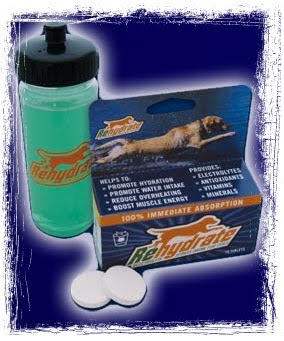
  • Before and after the hunt or workout use an electrolyte supplement such as "Rehydrate". According to their website...

"REHYDRATE was developed in conjunction with a doctor of veterinary medicine who specializes in animal nutrition at a leading university in the United States. REHYDRATE is designed to give canines a more effective hydration system than drinking plain water. The effervescent tablet that dissolves in water is formulated to replenish any lost electrolytes (i.e. sodium, chloride, potassium, etc.) due to aerobic activity. Also included are Vitamin C and other antioxidant minerals geared to promote general wellness. Each tablet is also flavored to enhance the palatability to promote optimum hydration and water intake." Click on image to visit their website.

If your dog shows signs of advanced heat stress...

  • Call your vet(don't assume anything)

  • Get them into shade or even better, an air conditioned room immediately.

  • Shower them in water and calm them down and try to get them to drink as much as possible(but do not force them to drink). After they have drank, gently splashing water in their mouth is fine and will help them cool down quicker.
  • Carry a cooler full of bagged ice can increase the cool down process. Allow your dog to lay down on the bags of ice. This can be done by placing the bags on the floor of his kennel(just make sure there is still adequate ventilation)

The ill effects of advanced heat stress stroke is the leading killer and crippler of sporting dogs. If your dog has suffered through these symptoms I recommend consulting your vet and scheduling a blood test. Heat stroke can cause damage to brain cells as well as effecting kidney functions. Only a proper blood test can determine the lasting effects.

As I write this, I look over at Dewey. He is sound asleep on the couch. The air conditioning is pumping a perfect 68 degrees and the ceiling fan is creating a nice downward breeze. Outside our front door it's 95 in the shade with a heat index of 105. Our workout will have to wait until later...much later!

Best of luck out there. -Mark


June 9, 2010

Poisonous Plants

Spring has now made way to summer. The countryside hills are rolling in emerald green. Homes are full of flower arrangements and gardens burst with freshly grown fruits and vegetables. April showers have indeed brought May flowers and the warmth of June continues their natural explosion across the land. This time of year very few dogs can resist the urge to occasionally graze on sweet greens and flowering stems. But danger lurks behind those photosynthetic producing beauties! Here is a quick list of common plants and flowers that could make your four legged canine friend very sick if not very lucky to be alive if consumed! Some are found only for purchase at your local horticultural retailer while many others can be found in the wild(or right in your backyard!) Take some time to look over this list common and potentially deadly garden variety plants and ornamental flowers.

It's a good idea to know what plants your dog is sticking his mug into!

List of Poisonous Plants & Flowers For Your Dog To Avoid...

  • Amaryllis
  • Baby's Breath

  • Bird of Paradise

  • Black Eyed Susan

  • Bleeding Heart

  • Bluebonnet

  • Boston Ivy

  • Calla Lilly

  • Chrysanthemums

  • Cyclamen

  • Daffodil

  • Daisy

  • Elephant Ear

  • Easter Lilly

  • Ferns

  • Flamingo plant

  • Geranium

  • Hemlock

  • Honeysuckle

  • Hyacinth

  • Hydrangea

  • Ivy

  • Jade plant

  • Lantana

  • Larkspur

  • Marigolds

  • Morning Glory

  • Peony

  • Primrose

  • Rhododendron

  • Tiger Lily

  • Yucca

  • Apricot

  • Avocado

  • Black Cherry

  • Black Walnuts

  • Castor Beans

  • Catnip

  • Chokecherry

  • Eggplant

  • Garlic

  • Mushrooms

  • Mustard plants/greens

  • Onion

  • Peach

  • Plum

  • Potato(plant)

  • Pokeweed
  • Spinach
Make sure you are familiar with this list before planting or spending time where any of these plants or flowers are accessible to dogs. It is a good idea to keep the ASPCA Poison Control Hotline number 1-888-426-4435 programmed in your cell in case of an emergancy. The ASPCA Poison Center is staffed 24 hours a day/7 days a week/365 days a year by board certified veterinary toxicologists standing by to help. Enjoy the beauty of spring and summer but thank god fall is right around the corner!

Best of luck out there. -Mark

May 24, 2010

Field First Aid Kit: The 5 Essentials

Top 5 First Aid Items NEVER To Be Without In The Field:


1. Fresh, Clean Water: Obvious, but as a reminder...Always carry a water bottle with enough for the time spent in the field! Dehydration kills more dogs than any other field related injury! Even in the cold weather it is imperative to keep your dog properly hydrated. It can also help to wash out a wounds if needed.

2. Styptic Powder: Coagulates blood fast to stop bleeding and also is an antiseptic. A top essential for sure! Also, remember to calm yourself as well as your dog down in time of an emergency. Styptic usually comes in a small container and makes for a perfect fit for a 12g shell holder in your vest pocket! Remember to moisten it with a little water between your finger tips before applying.

3. Eye Wash: Sterile solution to flush out debris, dust or other irritants. Just a small bottle will go a long way in helping your dog clean out his eyes in the field. Use it during your breaks if hunting heavy, dirty or dusty cover. Your dog will thank you by finduing more birds for sure!

4. Leatherman: Multi-tools these days are unbelievable. Scissors, pliers, knifes, awls, wire cutters, etc. Pretty much has you covered for any tool emergency in one small, lightweight fold up package! If you hunt, a leatherman tool is a MUST have in any field. They can cover it all like cutting barb wire, pull out porcupines quills,

5. Stretch Gauze: Made by 3M and other manufacturers and sometimes refered to as "vet wrap". This stuff is to a gun dog owner what duct tape was to MacGyver. It is self adherring and can be used as a bandage, tourniquet, tape, as well as a million other possibilities. Maybe even plug a leaky water pipe back at the hunting camp if needed! It is also wise to carry sterile gauze pads(prepacked) to layer underneathe the stretch gauze wrap.


Having the essentials in my vest saved us a trip back to the truck. Dirt and debris found it's way into Dewey' eyes during this warm winter day. I quick rinse of eye silution and we were back at it. Good thing because the truck was 10 miles away!

Warning: Many folks urge the use of Super Glue to seal up wounds in the field. This is not advisible. Glueing together tissue and skin without proper dissenfecting the wound in a sterile environment can lead to infection and further complications. The field or marsh is NO place to super glue a cut!

This is just my "Top 5 Field Essentials." Your truck kit should contain much more and ALL that is needed to get your four legged hunting companion to the nearest vet clinic in the best shape possible. My truck box is a "mini triage" center complete with everything you would need to safely transport an injured dog. You also might decide to add a couple more regional specific items. Having the right tools is one thing. Knowing how to use them correctly during an emergency situation is the hardest part. I recommend studying up on canine first aid techniques and how to properly treat field related injuries correctly.

Best of luck out there. -Mark

May 5, 2010

Possible K9 Cancer Causing Toxins In Tap Water

I woke up this morning and the first thing I thought about was water. I needed it. I had to have it. I reached into the refrigerator and grabbed a cold bottle of spring water. I slugged it down until it was dry. Then it hit me...

I looked down at Dewey's water bowl by my feet. The sides were stained white by hard water marks. The remaining liquid in the bottom of the dish had turned a copperish hue overnight. How could it be that I have long neglected the most obvious of health concerns for my canine compatriot? It was then that I came to the realization that I had been greatly negligent over the years. I had forgotten the most essential of life's nutrients and the most obvious of natures true health foods. For as long as I can remember, my dogs both past and present received bowls filled straight from the tap. This morning marked a turning point for me. If I was going to feed Dewey the highest quality food, train him endlessly, love him dearly, then I should not forget the building block of any organism here on Mother Earth...fresh, clean, pure...H2O!

According to the website USA Water Quality Organization in partnership with the USDA claim-"Both community and private sources of drinking water are susceptible to a myriad of chemical contaminants, biological pollutants and nuisance water problems that may vary depending on site conditions and other factors. Some of the more common chemical pollutants include pesticides, fertilizers, petroleum products, and industrial solvents. Some problem organisms, including viruses, bacteria, protozoa and algae, cause nuisance problems with taste and odor while others are potential pathogens. Threats to drinking water quality come from animal and plant production agriculture, industrial activities and even activities around our businesses, residences, recreational areas and transportation systems."

If there are scientifically proven concerns about human health in relation to consumption of public and private drinking water then I can very confidently assume that the water flowing from my household tap and those across this country may very well NOT be the very best option for dogs. According to the website Free Drinking Water the following organic and inorganic contaminants are found in varying levels across the U.S. Although these studies are done only from the impact on humans...it is easy to see that are four legged friends are also in harms way.

Coliform bacteria are common in the environment and are generally not harmful. However, the presence of these bacteria in drinking water is usually a result of a problem with the treatment system or the pipes which distribute water, and indicates that the water may be contaminated with germs that can cause disease.

Fecal Coliform and E-Coli are bacteria whose presence indicates that the water may be contaminated with human or animal wastes. Microbes in these wastes can cause short-term effects, such as diarrhea, cramps, nausea, headaches, or other symptoms.

Turbidity: Can interfere with disinfection and provide a medium for microbial growth. Turbidity may indicate the presence of disease causing organisms. These organisms include bacteria, viruses, and parasites that can cause symptoms such as nausea, cramps, diarrhea, and associated headaches.

Cryptosporidium: A parasite that enters lakes and rivers through sewage and animal waste. It causes cryptosporidiosis, a mild gastrointestinal disease. However, the disease can be severe or fatal for people with severely weakened immune systems.

Giardia lamblia: A parasite that enters lakes and rivers through sewage and animal waste. It causes gastrointestinal illness (e.g. diarrhea, vomiting, cramps).

Alpha emitters: Certain minerals are radioactive and may emit a form of radiation known as alpha radiation. Some people who drink water containing alpha emitters in excess of EPA's standard over many years may have an increased risk of getting cancer.

Beta/photon emitters: Certain minerals are radioactive and may emit forms of radiation known as photons and beta radiation. Some people who drink water containing beta and photon emitters in excess of EPA's standard over many years may have an increased risk of getting cancer.

Combined Radium 226/228: Some people who drink water containing radium 226 or 228 in excess of EPA's standard over many years may have an increased risk of getting cancer.
Radon gas can dissolve and accumulate in underground water sources, such as wells, and in the air in your home. Breathing radon can cause lung cancer. Drinking water containing radon presents a risk of developing cancer. Radon in air is more dangerous than radon in water.

Arsenic: drinking water containing arsenic in excess of EPA's standard over many years could experience skin damage or problems with their circulatory system, and may have an increased risk of getting cancer.

Flouride: Many communities add fluoride to their drinking water to promote dental health. Each community makes its own decision about whether or not to add fluoride. EPA has set an enforceable drinking water standard for fluoride of 4 mg/L (some people who drink water containing fluoride in excess of this level over many years could get bone disease, including pain and tenderness of the bones). EPA has also set a secondary fluoride standard of 2 mg/L to protect against dental fluorosis. Dental fluorosis, in its moderate or severe forms, may result in a brown staining and/or pitting of the permanent teeth. This problem occurs only in developing teeth, before they erupt from the gums. Children under nine should not drink water that has more than 2 mg/L of fluoride.

Lead: typically leaches into water from plumbing in older buildings. Lead pipes and plumbing fittings have been banned since August 1998. Children and pregnant women are most susceptible to lead health risks.

MTBE: is a fuel additive, commonly used in the United States to reduce carbon monoxide and ozone levels caused by auto emissions. Due to its widespread use, reports of MTBE detections in the nation's ground and surface water supplies are increasing. The Office of Water and other EPA offices are working with a panel of leading experts to focus on issues posed by the continued use of MTBE and other oxygenates in gasoline. EPA is currently studying the implications of setting a drinking water standard for MTBE.Drinking water, including bottled water, may reasonably be expected to contain at least small amounts of some contaminants.

Tap water may pose other risks. Hard water(such as my own here at my own home) contains iron, magnesium, or nitrates. But the MAJOR cause for concern is Chlorine and it's ill effects to humans...could this also be related to cancer in canines? I venture to guess it is highly probable!

This excerpt is from the website Pure Earth "The U.S. General Accounting Office reports that there are serious deficiencies in water treatment plants in 75% of the states. More than 120 million people (about 50% of the population) may get unsafe water according to a study conducted by the Natural Resources Defense Council. U.S. Health Officials estimate 900,000 people each year become ill - and possibly 900 die - from waterborne disease. The General Accounting Office estimates 66% of Safe Drinking Water Act violations are not reported. The contamination of water is directly related to the degree of contamination of our environment. Rainwater flushes airborne pollution from the skies, and then washes over the land before running into the, rivers, aquifers, and lakes that supply our drinking water. Any and all chemicals generated by human activity can and will find their way into water supplies. The chemical element chlorine is a corrosive, poisonous, greenish-yellow gas that has a suffocating odor and is 2 1/2 times heavier than air. Chlorine belongs to the group of elements called halogens. The halogens combine with metals to form compounds called halides. Chlorine is manufactured commercially by running an electric current through salt water. This process produces free chlorine, hydrogen, and sodium hydroxide. Chlorine is changed to its liquid form by compressing the gas, the resulting liquid is then shipped. Liquid chlorine is mixed into drinking water and swimming pools to destroy bacteria.

Until recently, concerns about drinking water focused on eliminating pathogens. The chlorine used to reduce the risk of infectious disease may account for a substantial portion of the cancer risk associated with drinking water. Chlorination of drinking water was a major factor in the reduction in the mortality rates associated with waterborne pathogens. The use of chlorine was believed to be safe. This view is evident in an article, which appeared on the back page of the New York Times. The report stated that with the use of chlorine, "Any municipal water supply can be made as pure as mountain spring water. Chlorination destroys all animal and microbial life, leaving no trace of itself afterwards". This statement reflected opinion accepted until recent years when halogenated organic compounds, such as chloroform, were identified in chlorinated drinking water supplies. Recent surveys show that these compounds are common in water supplies throughout the United States. These concerns about cancer risks associated with chemical contamination from chlorination by-products have resulted in numerous epidemiological studies. These studies generally support the notion that by-products of chlorination are associated with increased cancer risks. Chlorine is used to combat microbial contamination, but it can react with organic matter in the water and form dangerous, carcinogenic Trihalomethanes. According to Dr. Joseph M. Price, MD, in Moseby's Medical Dictionary, "Chlorine is the greatest crippler and killer of modern times. It is an insidious poison".

There are many reasons to concern ourselves with our water supply. But what can we do to cost effectively bringing good clean water to my glass and my dog's bowl after a hard day of hunting the upland country? Drinking bottled purified water is a possibility but economically and environmentally speaking it is not the best option for most. I decided to investigate the do-it-yourself filters available for sale at most home goods retailers everywhere. After much research I chose a PURwater filter. As advertised, it will remove 99% of contaminants possible from a stand alone filter system. Fortunately, Chlorine will dissipate from standing water in about 24 hours. I bought a jug type filter so that should work effectively for removing both the chlorine as well as removing heavy metals, cyst cultures, and organic/inorganic bacteria by the action of it's carbon filter. I will caution, some municipalities in this country are no longer using traditional chlorine. Instead they are using Chlorimine which does NOT dissipate from standing water like chlorine. Chlorimine is basically chlorine mixed with ammonia. I suggest you investigate what your city or town uses immediately. Chlorimine is an unproven alternative but is more cost effective for municipal water suppliers to use. During my research for this post I could find no definitive studies directly linking chlorimine to documented health issues. But with all synthetic chemical concoctions I would be VERY concerned.

May is Pet Cancer Awareness Month sponsored by PETCO Animal Supplies in partnership with the Morris Animal Foundation and Blue Buffalo Dog Food. I am not a Scientist, a Vet, or Medical Professional. I'm just a humble gun dog guy and passionate outdoorsman who cares greatly about our four legged friends. What I do know is 50% of all dogs die from some type of cancer related issue in this country every year. Could we speculate it is from abnormalities in our drinking water? After first investigating the possibilities, it is with great reason why I wrote this post. I feel it is highly possible given the data provided. If half of our dogs die from cancer, the great unknown is how many of those dogs develop cancer due directly to the very water they drink? I urge each of you to consider the quality of water you are supplying your dog. As always, preventative measures early on could equal less trips to the vet later.

I realize in this economic downturn priorities to survive are first and foremost. If you do choose to give a dog a home please try to provide him or her with with the best chances to live a long and happy life. Remember this...dogs where once wild creatures and only domesticated by early man to help provide an advantage when hunting for tribal food stores. In turn, canine prowess proliferated our human race by helping our forefathers harvest sustenance in times of need. It is our turn to repay their favor.

Best of luck to each of you out there. -Mark